


A repeating theme for The Moneyball Method is the concept: money is production, production is money. Naturally, a voluntary transaction is the missing step - and that is like the implied musical note in a melody that is understood and appreciated by listeners. In either case, the principals had the idea, made the decision, committed the act and lived with the effects. And their choice to think, decide and behave were volitional acts - meaning free will is implied.
Certainly, some decisions may be conditioned by heredity or culture, but more complex ideas involve the choice to think and act independently. That is most true for you to override conditioned responses or long-held beliefs that need to be replaced.
On a larger scale, wealth creation and its artistic dividend will compound themselves when a society bans the kind of force that punishes independence. To be specific, the initiation or threat of force by individuals, groups or governments will neutralize wealth and artistic creation - and the historical examples are overwhelming.
Today, Pyongyang, Caracas and Baghdad come to mind, but for centuries Europe’s Dark Ages earned that brand as nearly everyone lived in fear of highwaymen, holy knights, and war. The most creative minds in Europe had gone on strike after the fall of Rome in the fifth century AD and didn’t return to work until Aristotle was rediscovered in the West in the fourteenth century.
The Delegation of Force
The kind of force that defends and stimulates your desire and ability to be prosperous is retaliatory, but a civilized society must delegate as much of that as possible to an objective, professional third party. That is the legitimate role of government and everything you’ve read so far is the amazing achievement of America’s Declaration of Independence and Constitution.
For the purposes of this essay, a dominant military for national defense, police for the protection of individual rights, and courts to adjudicate violations and enforce contracts is a given. Just as importantly, it is money only made possible by free minds and free markets that pays for those essential services, which brings us to the relationship between government and money.
As introduced above, legitimate government is delegated, retaliatory force, but you can easily ignore the voluntary transaction to conclude - correctly, that government is force. That is what makes the balancing act for the extraction of property to protect property rights so fragile.
Trust is the glue that binds free markets, but trust can erode quickly when there is no profit incentive or voluntary trade. And the most invisible and insidious way for the forces of government to tip the scales in their favor is to create the illusion of free money, invent economic crises, and scapegoat the true creators of money.
The Initiation of Force
This activity comes in various forms, not the least of which is the income tax for wealth redistribution, the regulatory state that forces compliance costs that amount to 7% of GDP, and monetary devaluation that punishes the accumulation of capital that could easily solve any economic crisis as it occurs.
But to fully understand the virtues of hard money, the gold standard as stability, the depravity of fiat currency - and their positive or negative effects on each of us, this lengthy introduction was needed to establish currency devaluation as an invisible and destructive force.
What is at stake is your personal sovereignty. And that is the point. The fraud is intentional, the “common good” is the rationalization - and the principle of monetary devaluation is to separate life from value.
Today, the economic debate that dominates the news cycle is “inflation,” yet nearly everyone gets it wrong. It may be framed as the rate of inflation, affordability crisis, consumer price index (CPI) and real rates of return, but those terms address price inflation - which is not inflation. It is rising prices that may or may not be caused by monetary inflation.
To reiterate, inflation is not rising prices. And to essentialize that, I will lean on author and finance journalist John Tamny wrote in his marvelous book The Money Confusion, “Inflation is nothing more than a departure from a standard of value.”
On the monetary side, the debate includes “printing” money, quantitative easing, money supply, and foreign exchange. Regarding the latter, what could be more arbitrary? “Evidence supporting this is the frenzied daily trading of currencies that never took place before money was detached from the yellow metal that is money.”
The Marketing of Force
The point is that these are the commonly accepted terms for all sides of the debate - and they are designed to give credibility to incredible actors. The only money supply that matters is money in circulation because it is self-regulated by people who produce and trade. As a consolation, at least the retail pundits are not talking about the central banking nonsense of structural vector autoregressions (SVARs) or systematic policy analytical frameworks:
The demand channels are summarized by an aggregate demand curve that describes a negative relationship between output and inflation. For instance, as inflation increases above the Fed’s 2 percent inflation target, the public expects the Fed to increase interest rates.
Let’s decipher that:
Aggregate demand is a fictitious concept used to justify authoritarian control over the economy.
There is no negative relationship between output and inflation. Production creates wealth, wealth creates supply, supply lowers prices.
The Fed’s 2% inflation target is a really bad idea - and its purpose is to rationalize the Fed’s existence for limiting the devaluation to a politically acceptable level.
Are you the public? Do you want the Fed to raise interest rates when they screw up?
But I digress. Let’s talk about sound money. It must be accepted by producers as a tool that will purchase other goods and services from other producers without delay or expense. If it passes that test among countless traders, it becomes a reliable store of value for future purchases and investment.
To achieve that status, sound money must be stable, meaning new supply enters the market very slowly compared to the existing stock of money. This is the low flow-to-stock ratio of hard money - so it stands to reason that soft money has a high flow-to-stock ratio. Paper fiat money is a perfect example. People who produce nothing - but have the power to make the rules for those who do, are in love with the stuff.
Historical Highlights
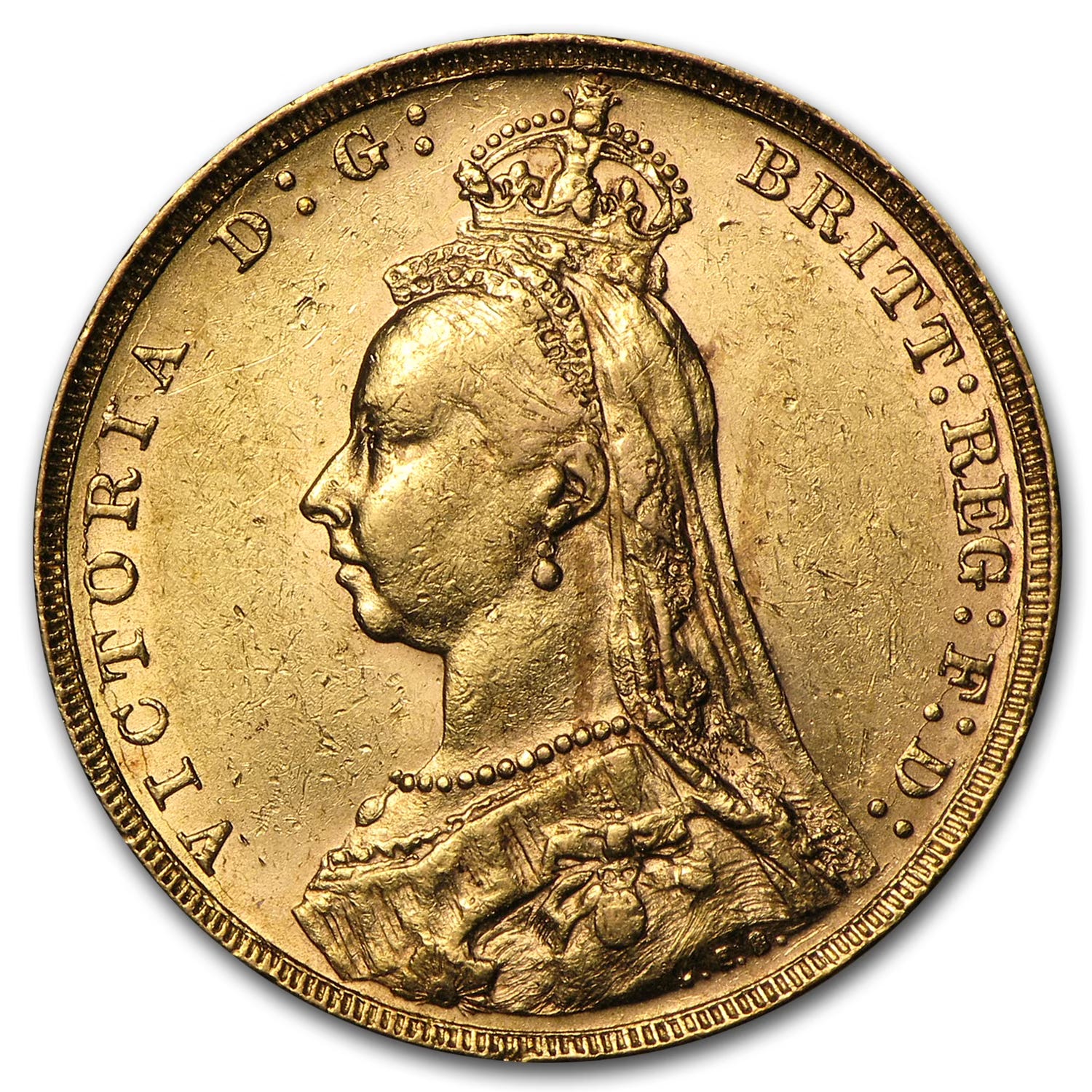
Accordingly, the only way for soft money to dominate a complex economic system is through the force of government. That creates the illusion of free money, justifies all sorts of government expansion to help “those in need,” compensates “public servants” for the “greater good,” and restricts the natural flow of capital. But historically, how did hard money versus soft money periods work out?
America’s colonial period is a fascinating study. The intellectual focus on natural law had an ideal incubator - the vast and wild frontier in which settlers from Europe were rebuilding their lives in remote locations. Naturally, agriculture was the primary industry, and paper money was backed by tobacco, rice, sugar or land contracts. And Africa’s age-old slave trade that exists to this day was a significant import for the southern colonies.
As a result, monetary and price inflation were not a major problem - depending on jurisdiction - and unless colonial governments issued bills of credit to finance armed conflict with the French or certain Native tribes. And not only was the coinage (specie - hard money) of European nations being circulated, the wampum (clamshell money) of those indigenous tribes was also used as a medium of exchange.
Clearly, America’s economic power was starting from zero and would have remained there without stable tools for trade and commerce. By the time 1780 rolled around, there were thriving merchants and independent banks who were able to buy Bills of Exchange issued by foreign governments for the American Revolution.
These were brokered by Haym Salomon of the Sons of Liberty and critical for victory because the Continentals issued by Congress were nearly worthless and many soldiers never got paid.
Naturally, high price inflation happened again during the American Civil War with the issuance of the fiat currency known as Greenbacks. To its credit, the US Treasury eventually returned to the gold standard in 1879, but it took that long because Treasury department officials believed they could manipulate post-war deflation by manipulating the contraction of their fiat currency supply. They could not. Governments do not create trusted money.
In addition, the Coinage Act destabilized hard currency by demonetizing silver in 1873 and further Greenback devaluation resumed in the wake of the Panic of 1873. Naturally, that was caused by heavily subsidized railroad industry speculation that backfired. But once the dollar’s stability became healthy, the Gilded Age became the greatest socioeconomic era in world history. Producers create trusted money.
But that ended with the progressivism of Democrat Woodrow Wilson and World War I, the depression of Democrat Franklin Rooselvelt and World War II, the collectivism of Democrat Lyndon Johnson and his War on Poverty, and the devaluation of Republican Richard Nixon and the Vietnam War. There seems to be a trend here.
Modern Central Banking
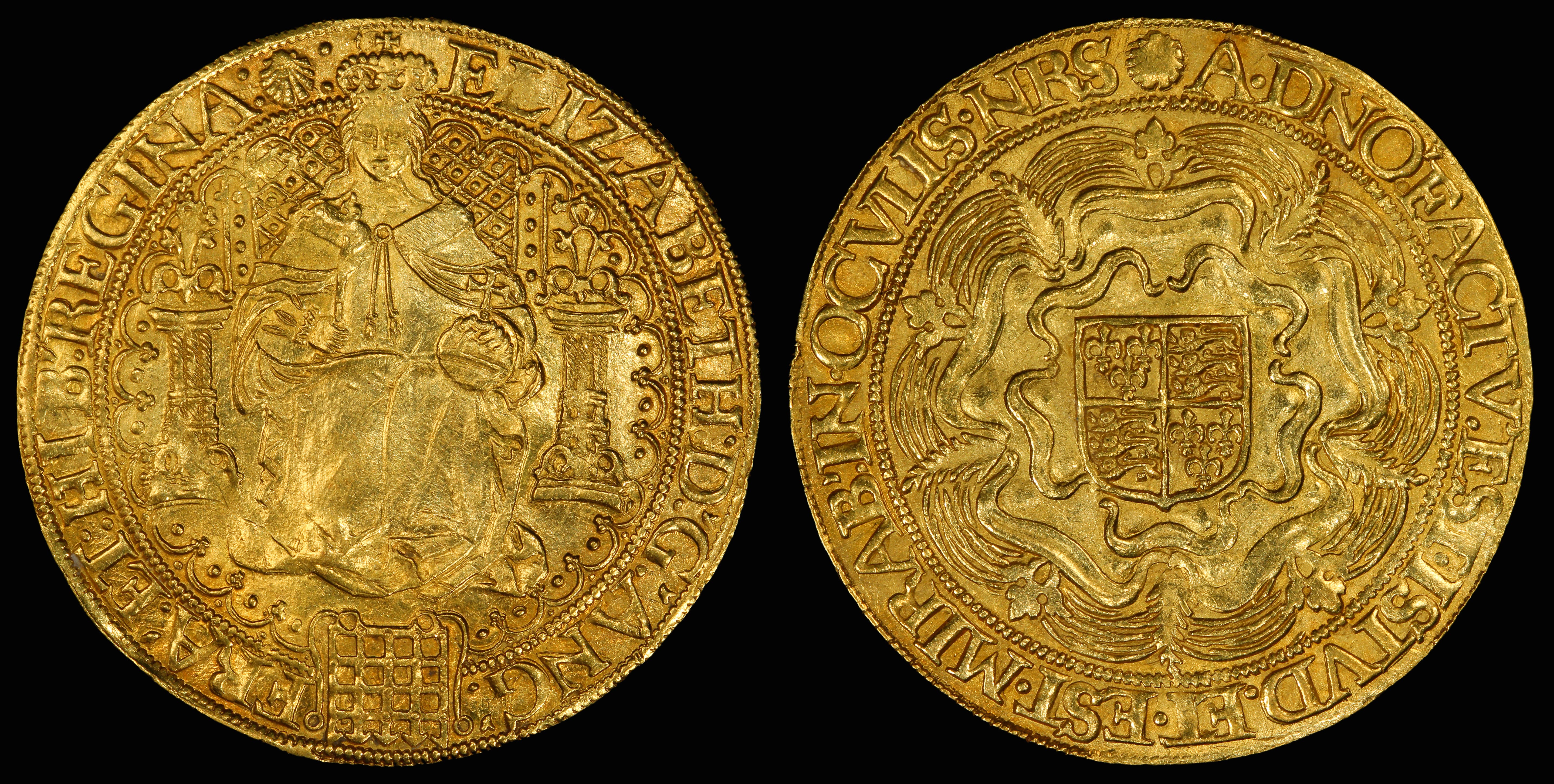
Wilson began the attack on gold with the establishment of the Federal Reserve in 1913. Twenty years later, Roosevelt banned the private ownership of gold with Executive Order 6102. In the early 1960s, Johnson repudiated the 1944 Gold Exchange Standard for stabilizing currencies with his massive deficit spending, and in 1971 Nixon ended the US dollar’s convertibility into gold because LBJ had effectively done that anyway.
This is the initiation of force. This is precisely what America’s Declaration of Independence and Constitution were intended and designed to prevent. And for those who believe we are our brother’s keeper, must go the extra mile, turn the other cheek and render unto Caesar because love of strangers is a virtue, you are complicit. There is no other way for the social safety net, universal health care, State education institutions and green energy scams to get overwhelming public support.
In support of transfer payments for basic living payments, housing and utility programs, food payments and medical reimbursements, it is all justified as spending that supports Gross Domestic Product (GDP) for the “greater good.” However, this leaves out the economic facts that matter:
This money had to be produced before it could be spent.
Owners of that wealth had it legally confiscated, which is the initiation of force.
If the money remained with its owners, it would have been spent or invested far more efficiently.
Lower prices and new capital would have created living standards we may never know.
The State does not create money. Money is production. Production is money.
In other words, all of that is dependent on the illusion of free money that supports the idea that you don’t own your life, chaos is the order of things, and government expertise is the solution. For too many people, that means dependency with the side effect of substance abuse
Take Ownership
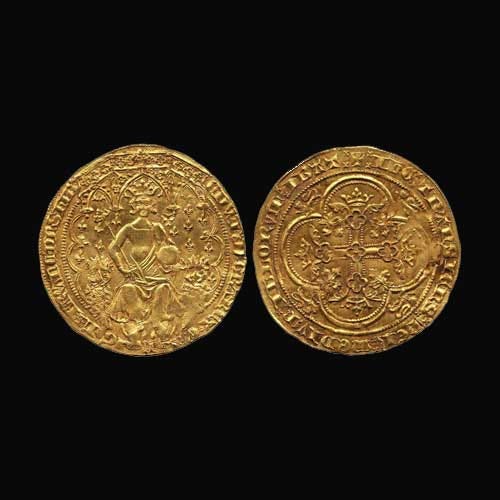
But how would a society of sound money affect your choices? As author and finance journalist John Tamny wrote in his marvelous book The Money Confusion, it reverses everything - for the better. Instead of consumption driving economic growth (GDP) as everyone believes:
Consumption is the consequence of growth that is logically a result of savings. Savings are what make possible intrepid leaps of entrepreneurs and businesses to rush a much better future into the present . . . Debase money, as in devalue it or destabilize it, and you slow the natural division of labor so crucial to progress while also slowing the investment in advances that will enable greater specialization among individuals.
Ultimately, in a society of sound money you may save more because your ideas extend further into the future. You may buy goods and services at lower prices, which frees money to save more or enjoy the things that matter. You may become more productive in your job with greater specialization, earn more, save more and spend more. The important thing is to identify the important goals - in context with each other, and establish an objective measure for them. That is the new performance benchmark.
Furthermore, everyone else has the opportunity to become happier, more productive, more prosperous and able to trade with you for mutual profit. And that profit can be financial, material, or spiritual, but in essence, you will be able to acquire more of the quantity that matters most - time. The principle for the objective investor is: life is value pursuit, value pursuit is life.
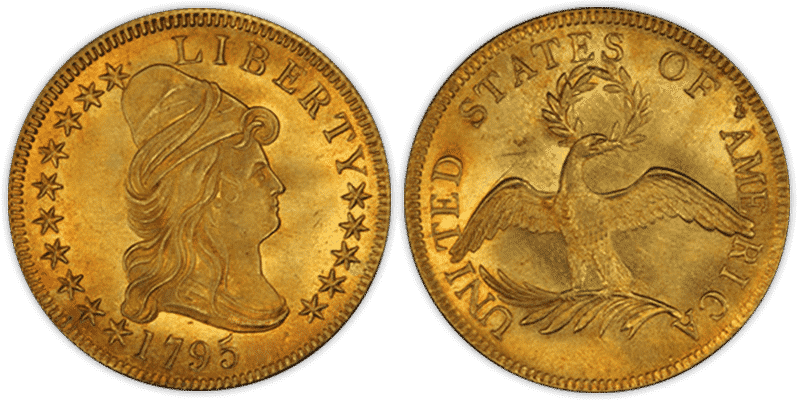
In the meantime, there are several ways that individual investors can supplement their wealth producing work and wealth producing assets with the existing wealth of hard assets. Besides real estate and physical gold or other precious metals, there are financial instruments that I will not recommend - one way or another, because that is not appropriate.
Suffice it to say there are securities in the form of exchange traded gold funds, bonds denominated in gold and pay interest in gold, and goldbacks which are like bank notes infused with gold. As a general rule, they may be a diversification tool for a traditional portfolio (large deviation events), a hedge against monetary crises (extraordinarily large deviation events), and fun to flash around or discuss with gold bugs
.