



Part I of this series ended with: “Builders, build, beginning with themselves. That is The Moneyball Method.” There is a lot here. What is a builder? Why do they build? Why do builders begin with themselves? How is this relevant to objective investing? To help answer these questions, psychologist Gena Gorlin wrote:
“Our ultimate task as human agents, after all, is to architect our own lives: that is, the whole latticework of interconnected ends and means to which we want our life to add up.”
As human agents, we have the ability to make decisions for ourselves and act independently. But to become builders, we must turn this natural agency into value-driven objectives, match those with defined goals, create a plan of action, and become committed. As Gorlin also said, “it is a demanding love” that begins with reverence for oneself. It begins with self-esteem.
But for nearly everyone, it is easier said than done, even for the most prolific builders. That is because there are social pressures to understand and dismiss before they gain too much influence over our emotional intelligence. As mentioned in Part I, those include faith-based systems that reduce your self worth with scapegoating (victimhood), entropy (blanking out), subjectiveness (avoiding causality), and envy (hating success).
These may be the most expensive forms of taxation, but their effects cannot be measured because the economic term is opportunity cost. It is what could have been.

The Cost of Comfort
Into this mix, we can add a phenomenon of cognitive inversion. For those who experience this irrational emotion, it is the result of living in a culture with the greatest prosperity the world has ever known. And its cause is a greater number of builders than the world has ever produced. As psychology professor John Dennis wrote about personal agency:
People intentionally engage in goal-directed actions, which are fundamental for our understanding of ourselves, others, and events . . . Perceiving oneself as having some degree of control over one’s actions has widespread importance in the development of the human species.
But agency can be subverted in a modern, division of labor economy, as he explained in his talk titled The Comfort Trap at the OCON 2026 conference: “Comfort arrives as a drift, friction starts to look unfair, challenges begin to look like harm.” That is because throughout human history, “comfort was something you had earned.” If you don’t earn it, you may think you are entitled. If you feel entitled, uncomfortable circumstances will seem like an injustice. If these injustices persist, they compound and become threats.
Who is to blame for these imagined discomforts, injustices and threats? The builders. And to further develop the dichotomy of the cost of comfort, Dennis illustrated:
Earned Thought Borrowed Thought.
Identification Imitation Judgment Slogans Integration Contradictions Understanding Borrowed Conclusions
To clarify, identification is the conscious mind observing things in the natural world as distinct entities that behave in certain ways. It is what rational people, including builders, do. Imitators rely on other people to explain the nature of things. Judgment applies the same standard of cause and effect to the behavior of people and groups. Slogans are popular ideas that replace the effort and risks of judgment.
Integration is the combination of many concepts into logical frameworks that obey reality, increase knowledge, expand awareness, and induce serenity. Contradictions are the natural result of avoiding causality and independent judgment. Consequently, borrowed thought leads to stress, anxiety, scapegoating and envy.
Imitation, slogans, contradictions and borrowed conclusions are also like taxes that carry significant opportunity costs — emotionally, educationally, recreationally, or financially.
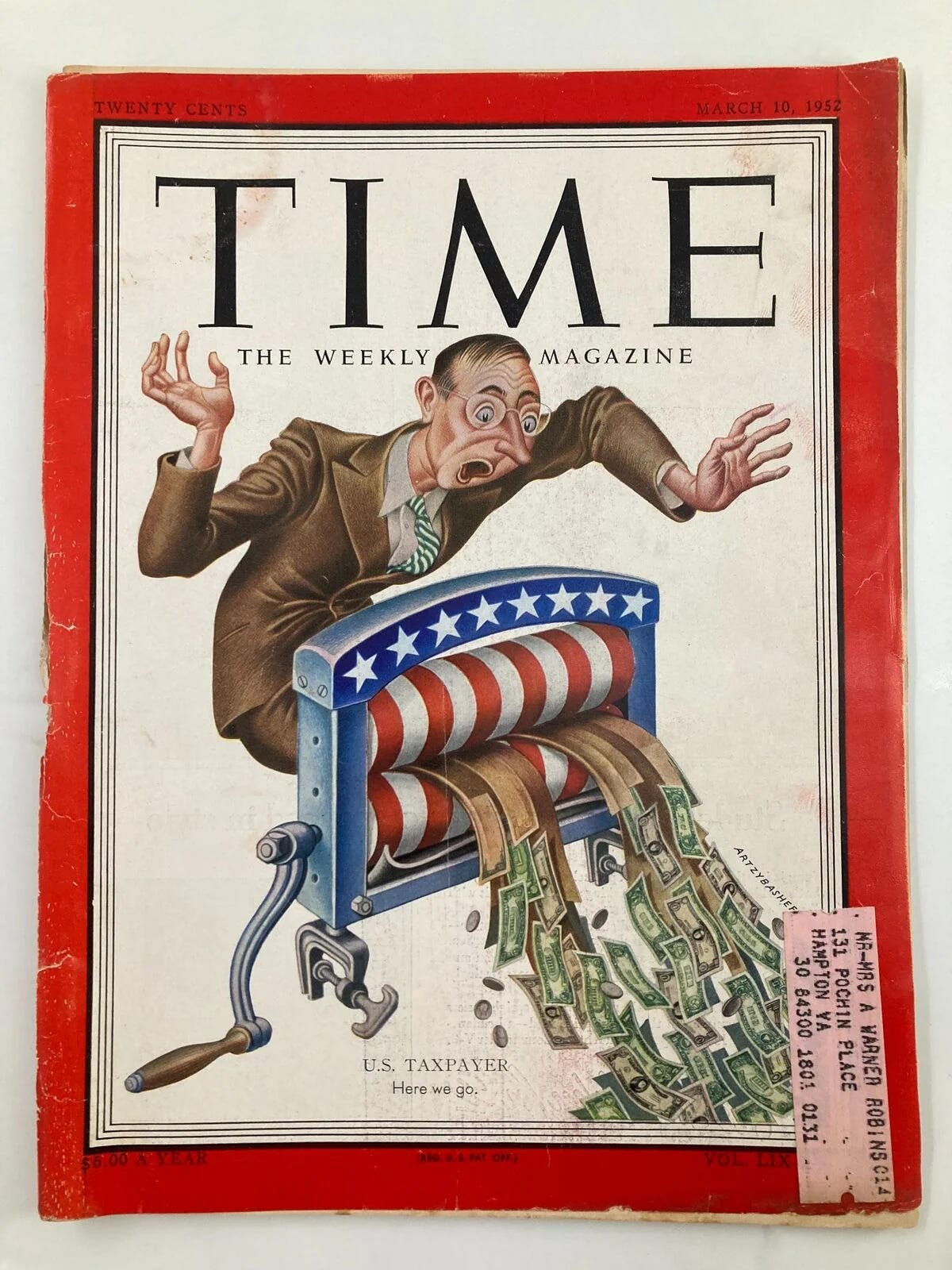
For non-producers experiencing the stress and anxiety of contradictions, Dennis offered some ideas for introspection. If these emotions are troublesome, ask yourself: “What is it telling me? What value is at stake? What am I avoiding? What am I losing? What standard have I violated?” For the non-producers out there, this is the first step to becoming a builder. Or as Dr. Gorlin stated later in the conference: “Builders recognize emotions are not causes — that emotions must be built.”
Ultimately, the standard will be principles grounded in reality, values will be life-enhancing and integrated with each other, and self-esteem will be reinforced.
The Contractual Thinker
Wrapping up this theme on the last day of OCON was philosophy professor Tara Smith. Her presentation was titled Intellectual Shrinkage And Its Costs — and she mentions several costs of a shallow intellect to your character, happiness, and awareness.
As defined by Dr. Smith: “the conceptual thinker is an active thinker who wants to understand.” And she further explained this by comparing conceptual thinking to its less active cousin: “the contractual thinker reduces to concretes.” In this usage, concretes are the ideas you maintain as isolated facts without their proper context.
As a result, the contractual thinker has little interest in abstract concepts and better ideas — and as Smith maintains, “public education is narrowing the gaze.” Instead of classical education that teaches students about the greatest thinkers and literature of Western civilization, college curricula has littered its course offerings with titles like “The Greatest Movies of Last Year.”
Of course, that is not a news flash to this audience, but what effect can this have on the independence, pride, self-esteem and productiveness of the young people exposed to this kind of cognitive impairment?
“Ignorance is a handicap . . . Conceptual contraction reduces your capacity for happiness . . . It is the loss of an identity to form . . . To be is to be something . . . You are cheating your character . . . The less you know, the less you will value, the less you will feel.”
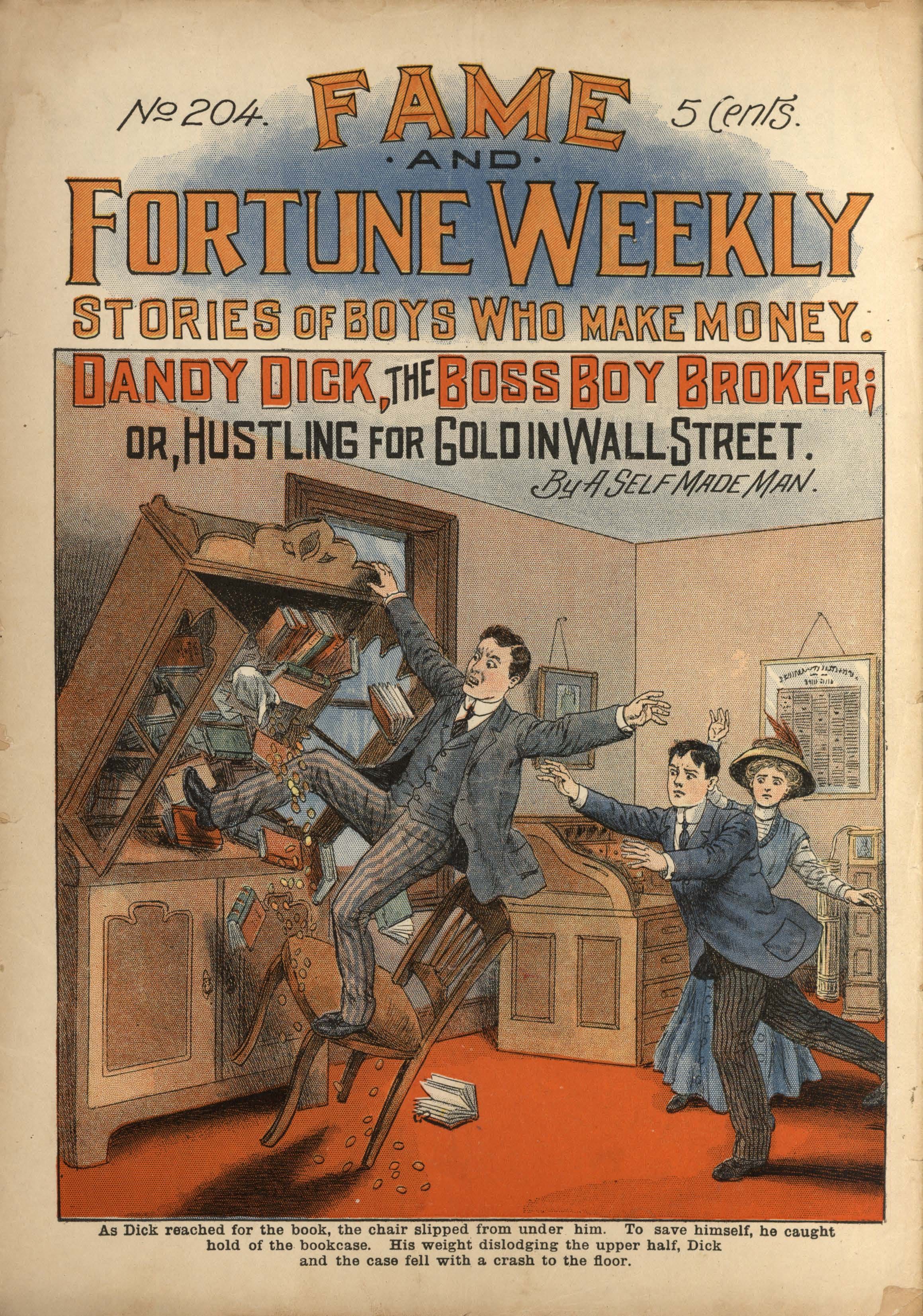
In summary, “valuing entails awareness,” but Dr. Smith added another interesting observation. To paraphrase, she said that economists talk about the effects of intellectual shrinkage as “invisibles.” As a student of economics, I thought Dr. Smith misspoke; that she may have meant “externalities.” I know of “shrinkage” as an accounting term for theft, the “invisible hand” of Adam Smith for free markets, and the “unseen” of Frederic Bastiat for State malfeasance, but not invisibles.
As it turns out, ‘invisibles’ are related to the concept of the “extraction economy” that describes corporate and government bureaucracies that exist for the maintenance of measurement systems for the sake of measuring stuff. For example, the regulatory State requires corporate compliance officers who need process reports from analysts who identify problems that demand greater compliance costs. As reported by Flagright, this is especially true in the banking industry:
Beneath the surface lie “hidden” costs of AML compliance that often go overlooked on the balance sheet but significantly drag down efficiency and growth. False positives and redundant alerts bog down teams. Siloed tools and manual processes sap productivity. Excessive caution and fragmented tech can slow customer onboarding, driving good customers away.
On top of the $200 billion financial institutions pay outright, these hidden costs are the “invisibles” referenced by Dr. Smith in government education. And that leaves unsaid the grossly outsized administration budgets for diversity quotas and “studies” programs. And in health care, there are third-party medical care payers wrecking the price mechanism with grossly inflated costs and unnecessary testing.
For me, all of this hit home when the president of a successful small town bank told me that he retired because 80% of his time was spent with regulators instead of customers. And again when I got a visit from the HR officer of my much larger bank to tell me my job had been eliminated after scoring near the top of the stack rankings, getting an outstanding performance review, and being part of the team that was held out as the model for every other private banking team in the region.
In other words, there is no value creation, wealth is consumed, productivity is impaired, capital is stagnant, and the self esteem of people doing what they know to be “bullshit jobs” is limited.

The Conceptual Thinker
Fortunately, it is easy to extricate oneself from the extraction economy with sound principles, defined values, and the self-esteem to invest for the long run. That kind of independence is not easy in a society that condemns independence, but rest assured, the promoters of subjectivism and dependence are impotent without your cooperation.
With this kind of confidence, you are ready to define the values in which you would like to invest. Are they educational, entrepreneurial, artistic, or financial? What time and money commitments are needed? Are there family, business, or debt obligations to consider? Of course, assets and income sources are relevant, but the important thing is to know that you are competent to think independently and deserve the happiness your success will deliver.
At the same time, the world of financial investing is riddled with unreliable, expensive, subjective and contradictory slogans and packaged deals. Those include macroeconomic analysis, stock price targets, and technical charts — all for adding alpha (outperformance), plus risk tolerance questionnaires, hyperdiversification techniques, and social responsibility — all for risk-adjusted alpha. Fortunately, it is easy to extricate oneself from the entrenched bureaucracy and make decisions that are objective and reliable.
Objective investors do this by reversing the cognitive inversion of the traditional advice model. Instead of trying to predict the future and measure performance looking backward using percent returns, wealth oriented investors use the most reliable historical data and measure performance with the only benchmark that matters: their statistically high confidence for living with purpose and pride.
That is the entrepreneurial mindset: create the vision, take calculated risks, learn from experience and measure success as dollars of future wealth. Your vision turned into dreams, dollars and deadlines is new found wealth. The remaining step is to create your business plan in the form of the Investment Policy Statement (IPS). With all relevant personal and financial information, the IPS will specify your cash flow and investment strategy, funding status and risk capacity, and the capital market assumptions that were used to gain that level of confidence.
In summary, objective investors control what they can control, balance that with the uncertainty of capital markets, and have a contingency plan — in advance, for extreme events. No one else does that. And when you are able to answer the essential question: “to make money for what,” you learn the true meaning of financial independence.

Love the illustrations!