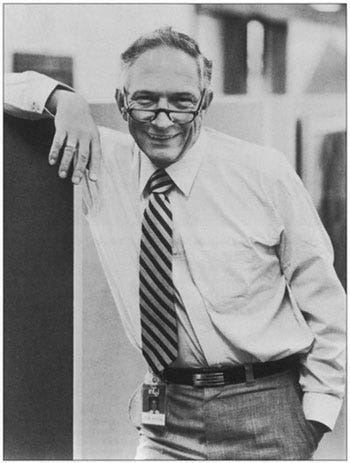
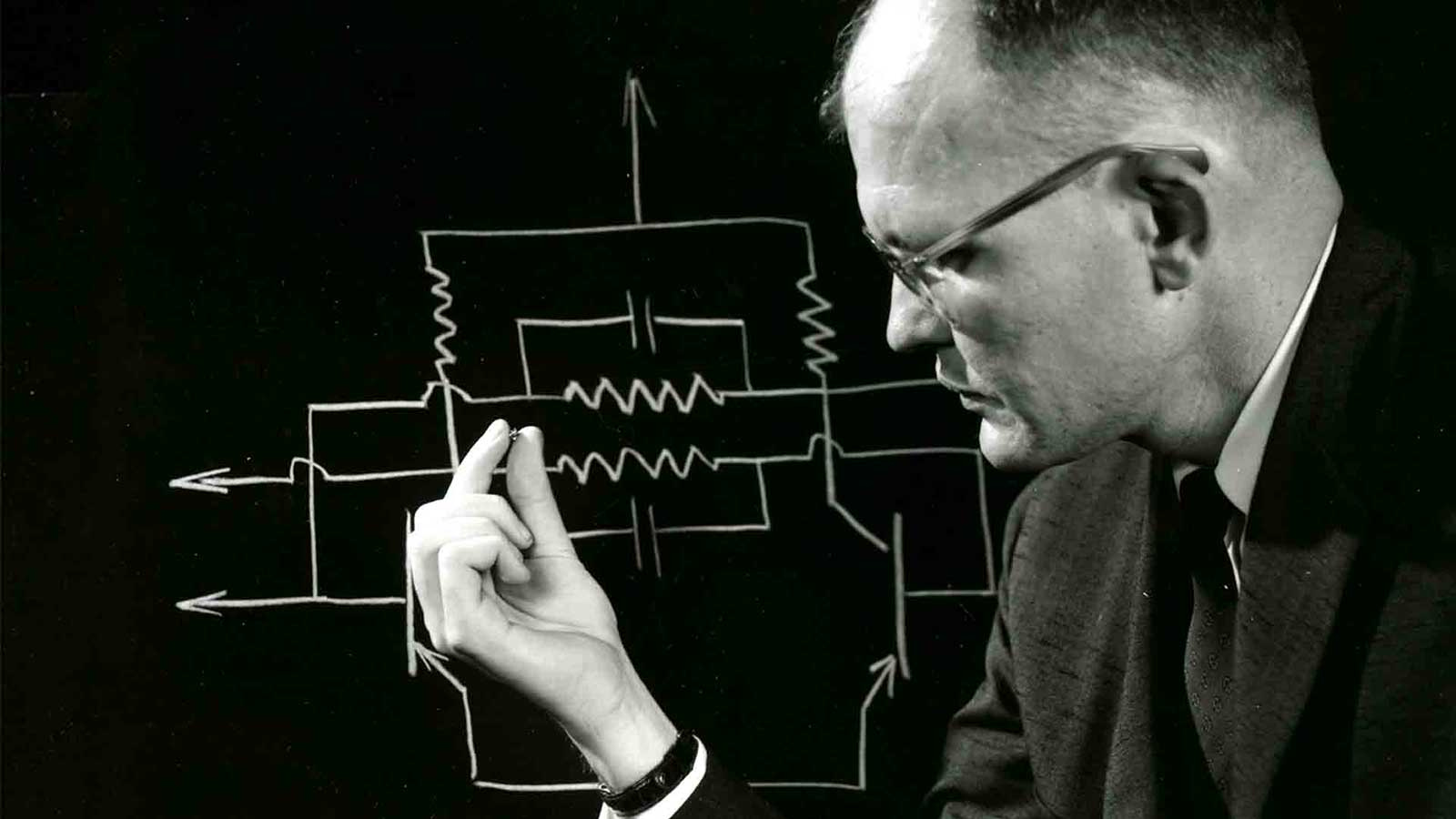
During the 1950s and 1960s Robert Noyce of Fairchild Semiconductor and Jack Kilby of Texas Instruments pioneered the integrated circuit that became the silicon chip. This breakthrough delivered countless and mind boggling benefits for human life on planet earth, and the reason is that silicon chips move electrons far more efficiently than vacuum tubes.
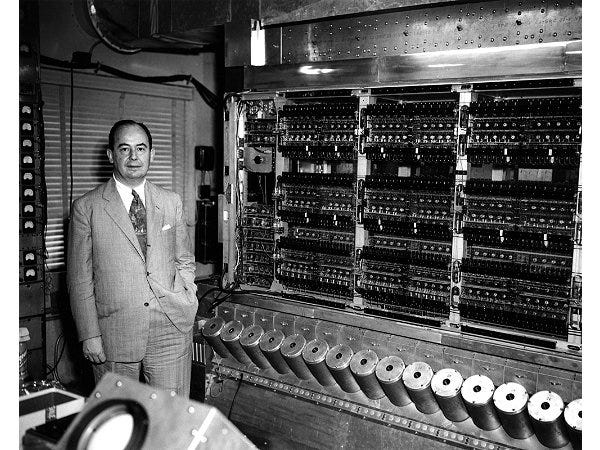
To be efficient is to be more productive with less waste. In this case, the waste was the comparative time, energy, and space needed for the vacuum tubes. In the late 1950s, a single silicon chip cost about $120, but replaced many vacuum tubes plus their wiring. Eventually the cost of each chip dropped significantly and could handle the work of thousands of vacuum tubes costing less than one dollar each.
Now the residual amounts of wiring needed, meaning the flow of information between processors, will be replaced by something other than electrons flowing through copper. According to Ayar Labs, their optics technology will deliver 4x to 20x the commuting capacity per watt of energy. And on May 6th, a partnership between NVIDIA and Corning Glass was announced that will increase Corning’s optic connectivity capacity by ten times, fiber manufacturing by 50%, and add 3000 high-paying jobs to the market.
Not surprisingly, these plants will be located in North Carolina and Texas — American states with governance that is friendly to human life, aka capital formation. According to the Wall Street Journal, NVIDIA will invest $500 million in their partnership with Corning, and as the Mirror Review reports, they have secured warrants to invest an additional $3.2 billion in 15 million Corning shares at $180.
Financial Engineering
This is in addition to two major investments announced in early March by NVIDIA: a pair of $2 billion dollar deals with Coherent and Lumentum to acquire optical networking and lasers that convert information from light to electrical signals. And all of this is to create more efficient infrastructure for the construction of AI data centers:
The Corning NVIDIA Deal marks a shift from simple data transmission to deeply integrated “co-packaged optics”. This technology brings fiber optics directly to the chip level, allowing intelligence to move at the speed of light.
In other words, photons flowing through fields of glass solve the engineering challenge of large-scale AI clusters that create bottlenecks and consume most of the power. As Forbes put it:
Light travels through fiber with negligible power loss regardless of distance. Converting electrical signals into photons at the source and back into electrons at the destination eliminates most of the power overhead that makes copper untenable at scale.
Naturally, this will significantly reduce the electrical generation needed to operate AI data centers and ultimately reduce the costs and increase the benefits of large language model programs for end users, but the financial engineering is also of great value.
NVIDIA’s access to capital is attributable to their stock price, but they are not acquiring Coherent, Lumentum, Corning or Ayar Labs. According to research published by NAND, they can achieve the benefits of vertical integration without paying a premium buy-out price, inviting the wrath of the antitrust neanderthals, or burning bridges with potential suppliers.

Photonics Engineering
And we get the bonus of an important new word for my vocabulary: photonics. Actually, it’s not really new — photonics has been around since laser development began in the early 1960s. Without getting too technical, it is the processing of radiation units in the electromagnetic spectrum of visible and near infrared light.
Essentially, photons can move through silica glass at speeds closer to light because photons have no mass but they do have momentum. The physics of that is well beyond my expertise and the scope of this essay, but it is accurate to say that fiber optic delivered information is a quantum leap because laser technology is a literal quantum leap.
In fact, it is poetic justice that the enormous electrical power and photonic bandwidth needed to mine Bitcoin (digital money) is now needed for AI (digital knowledge). Knowledge is power. Production is money. Power is knowledge. Money is production.
Equally fascinating is the comparison of electrons and photons with money and prices, electromagnetic fields with free markets, and gravitational pull with capital finding talent. And that is not really new - journalist Isabel Paterson made this critical observation in her 1943 classic, The God of the Machine:
Money is indispensable to a long-circuit heavy load energy system. Money represents a storage battery when idle, and a generalized mode of the conversion of energy when it is in motion, with a function of equating time and space.
The analogy is strong. If money and electrons flow through the time and space of their respective domains - economies and electromagnetic fields, NVIDIA and Corning are accelerating both. And in the socioeconomic sense, the peace and prosperity of modern societies is determined by the flow of electricity and the flow of capital.
Corning is a company with a 173-year evolution since producing the glass encasement for Thomas Edison’s first lightbulb. The original order from Edison, dated 1880, still sits in the Chairman’s office today. So it is only historically fitting that they work on building the photonics needed for AI evolution.
The Butterfly Effect
Last year while I was watching a news conference barely listening, I heard President Trump mention Harrodsburg, Kentucky. That got my attention.
Apple and Corning were announcing a partnership that included a $2.5 commitment for the manufacture of iPhone and Apple Watch glass covers at Corning’s Harrodsburg manufacturing plant. Instantly, that explained why the tenant for my loft apartment near Harrodsburg had driven herself and her personal belongings from Corning, New York to central Kentucky. She was a chemist for Corning and I’ve got a really cool place.
Two billion here. Two billion there. Capital with a vision moving rapidly to its most productive uses and finding talent. But where do these numbers come from? Money isn’t stupid. The senior management teams, electrical engineers, logistics analysts, investment bankers, and countless others on both sides of these transactions arrive at prices they are willing to accept and pay for their respective talents.
On top of that, there is no assurance that these investments will pay off handsomely, barely break even, or lose money. In fact, there are only three things holding the deals together. Contracts, objective law, and trust. And from where does this trust originate? Skin in the game. As Adam Smith explained, all participants have money and the profit motive to perform.

Price Discovery
What could possibly go wrong? Countless things - from natural disasters to innovation that renders the latest technology obsolete. But most likely and insidious is the use of force that impedes the rapid flow of price information - as Paterson also explained in 1943:
The possibility of a short circuit, ensuing leakage and breakdown or explosion, occurs in the hook-up of political organization to the productive processes. This is not a figure of speech or analogy, but a specific physical description of what happens.
Regulatory agencies do not have the talent, skin in the game or the profit incentive. And in the case of the financial engineering needed for the NVIDIA deals with Corning, Coherent, Lumentum and Ayar Labs, capital commitments had to be adjusted for the threats of antitrust action. There is a cost to that and we will never know what it is.

For a physical description of the photonic effects of economic freedom, Corning has produced glass so pure that the depths of the Marianas Trench would be discernable to the naked eye through its Pacific Ocean. To understand this in a small way, take a look at your favorite image through museum glass and compare that to standard picture glass.
Besides the impurities in the ordinary glass, the difference is money and talent — and the benefit is your exposure to fine art. Or in the case of AI data centers — your exposure to vast knowledge. Or even better, your increased knowledge of the benefits of romantic art with the discovery of leisure time due to the efficiency of new data centers.