


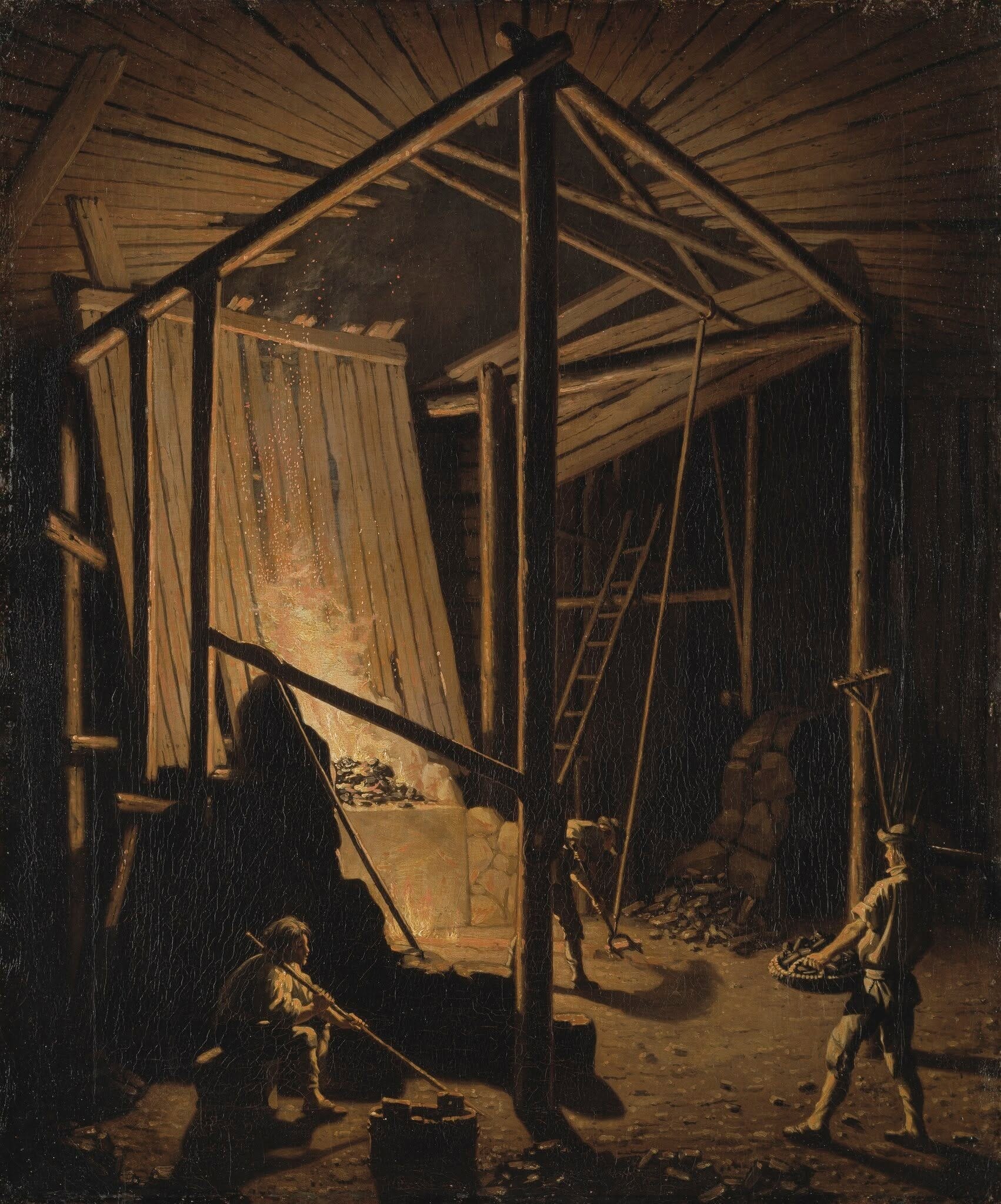
Over the last four years, the price of copper has doubled to $6.62 – and over the last twelve months, the theft of copper products has spiked 77%. Of course, copper’s greater market value is an incentive for cargo crime rings, but a significant reason is the 50% tariffs on semi finished products that were forced onto copper importers by the Trump administration in August 2025.
Yet, the price of a lot of things have doubled over the last four years, including the US stock market – and to keep things in perspective, the price of oil has also risen over the last year, but only to the same levels as July 2022. And over forty years from the mid 1960s to the early 2000s, the price of copper fluctuated between 40 cents and $1.40 per pound. For that time, these fluctuations can be attributed to the dynamics of normal industrial supply and demand.
Doctor Copper
In fact, copper is so sensitive to economic activity that Wall Street analysts refer to it as Doctor Copper. Not only is it the essential component for wiring, plumbing, electronics, power generators, power lines, automobiles, and industrial machinery, no other commodity that can replace copper at scale. Accordingly, the price of copper is a reliable leading indicator for the economic vitality of the global economy.
That is significant. In the most complex economic system the world has ever known, there are alternative production inputs for most materials – at a price - and those prices constantly adjust to each other. The effect is to spontaneously maximize production and distribution efficiencies, but with no viable alternative to copper, it is particularly valuable to everyone, everywhere, all of the time. So is water, but that falls from the sky and fills vast reservoirs easily discovered by plants and animals. But to get closer to the story of copper, we need to dig deeper.
America’s population grew by about 100 million – or 33%, during the 40 year period ending in the mid 2000s, but because of ever-improving methods for the exploration, extraction, refining, and recycling of copper, its price stayed within the 40 cents to $1.40 range. That is because of innovation driven by the profit motive - and only the force of government planners, theft or fraud could mess that up – or the public policy think tanks that inspire government planners and seduce voters.
China Syndrome
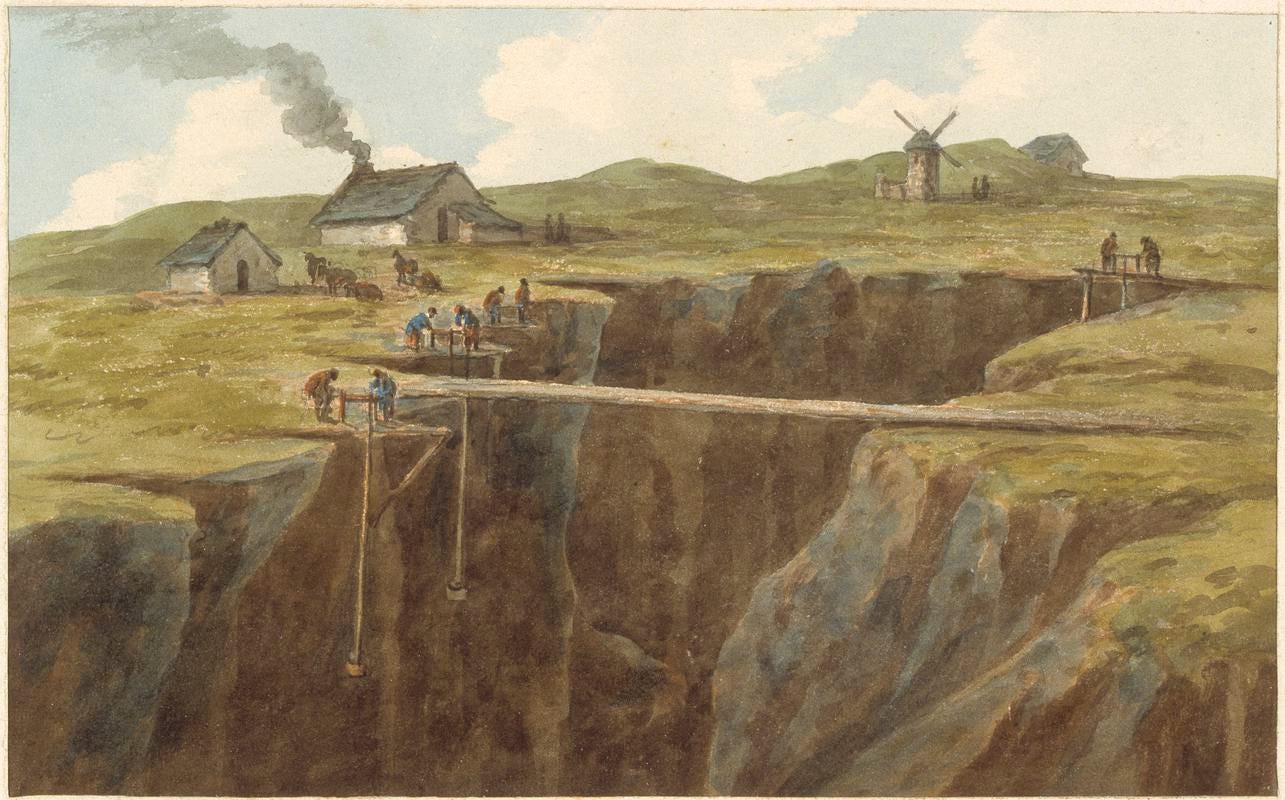
Then the China super-cycle of authoritarian central planning created a demand-side shock. Debt fueled spending drove the construction of new urban centers and industrial capacity that spiked Chinese GDP to over 10% annually through 2011. Naturally, the Chinese government needed copper for power generation, machinery and electronics (like everyone else), and that ended with nearly $4.00 per pound copper price between 2006 and 2009.
To boot, construction demand in the United States and Europe were factors – and there was a direct correlation between copper prices and the frequency of industrial metal theft incidents.
“With copper prices at $3.00 per pound, there is a lot of incentive to find more metal and thieves are willing to look just about anywhere for it. With eager international buyers, increasing exports, and people willing to look the other way at questionable sources, it is easy to understand why copper theft is becoming more common.”
And in terms of electronic equipment, televisions have been replaced by computer servers, storage hardware and crypto mining rigs. But to get closer to the story of copper, we need to dig deeper.
Population Bomb
During the 40 year period mentioned above, there was a now famous wager between University of Illinois economist Julian Simon and Stanford University biologist Paul Ehrlich. Ehrlich was famous for his doomsday book titled The Population Bomb (1968) and Simon was less well-known for his renaissance book titled The Unknown Resource (1981).
The bet was set on September 29, 1980, the ending measurement date was ten years later, and the conditions Simon requested was for Ehrlich to select a basket of raw materials with prices not controlled by government regulators. For his part, Ehrlich chose copper, chromium, nickel, tin, and tungsten. Simon bet that the inflation adjusted prices would decline, and Ehrlich was betting they would rise due to overwhelming demand from a population explosion.
As you know from above, the population increase occurred, and you may have guessed the inflation adjusted prices of the commodities basket fell. In 1980, they bought $1000 worth of the total basket in equal shares, and in 1990, Ehrlich wrote Simon a check for $576.07. Tin had fallen by more than half on an absolute basis and they all had fallen on an inflation adjusted basis.
The Ultimate Resource
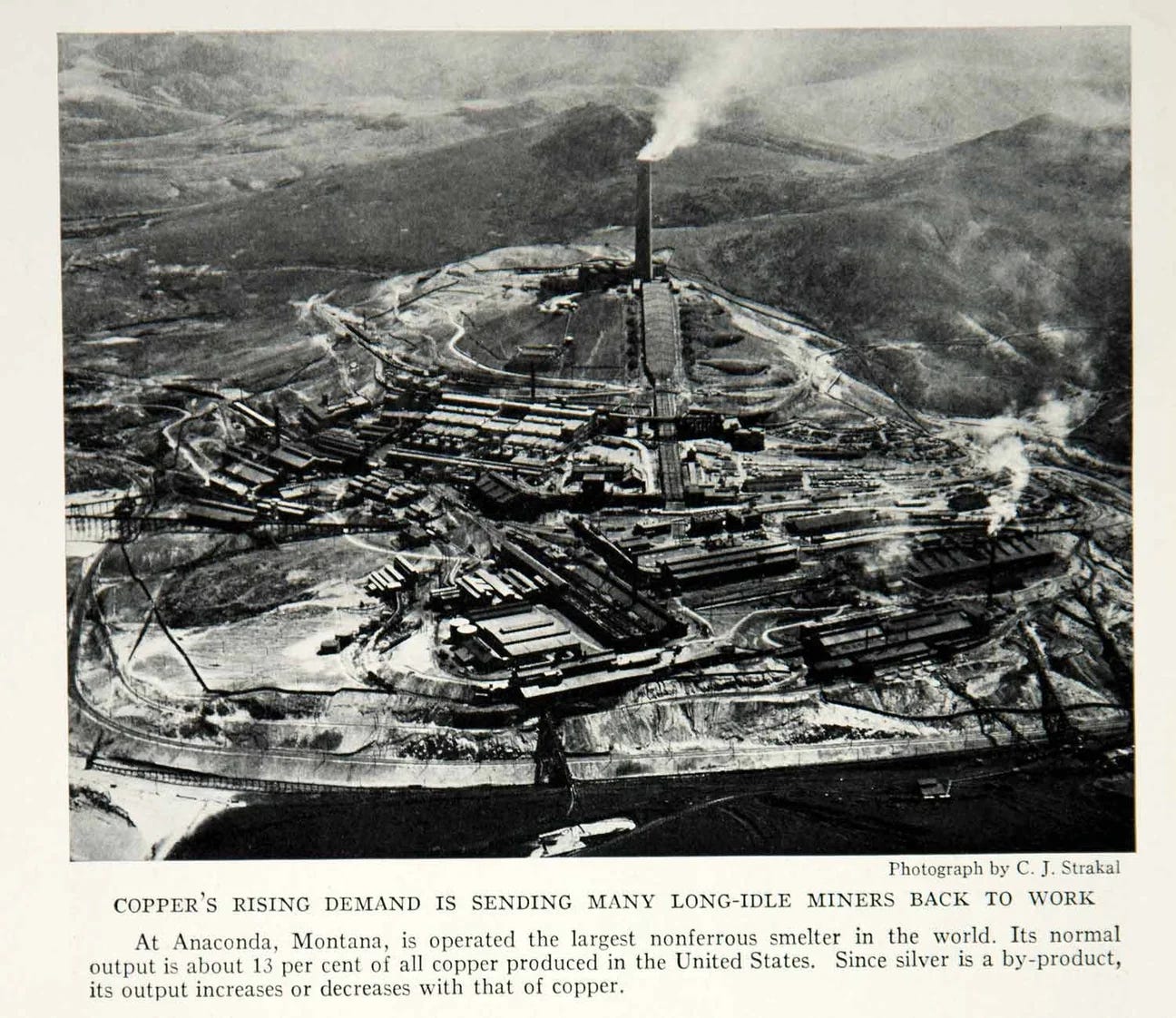
Essentially, Ehrlich was using Club of Rome style projections. These are models that employ finite levels of natural resources against an exponential increase in consumption across all markets. In contrast, Simon believed that supply would increase as a greater number of human minds were solving for more efficient exploration, extraction, refining, and recycling.
It was demand side destruction versus supply-side innovation. But to get closer to the story of copper, we need to dig deeper.
In today’s AI electrification super cycle — one first driven by crypto currency mining rigs - and more recently by hyper-scale data centers, the price of copper has jumped sharply again.
Think about that, the formerly attractive TV targets consume mostly time and money, but crypto rigs and servers consume electrons for the preservation of money and knowledge. And the cultural shift is greater. The proponents of the Abundance agenda (free housing, groceries, medical care, education and child care) are calling for the repeal of environmental regulations to build new electricity generation.
That is a radical turn for environmentalists at war with money and the mind. Their new government “investments” in electricity will power the artificial intelligence and robotics that will do the work in their communist utopia. What does copper have to do with any of this you might ask. What is it about copper that makes it uniquely suitable for so many applications that are essential to modern life?
Free Electrons
For plumbing systems, copper is light, strong, durable, antimicrobial, ductile, does not rust and is fully recyclable. That is an amazing combination — much like the network of scientists, engineers, manufacturers, merchants, artists and bankers (aka producers) that comprise free markets. Certainly, I am no chemical engineer, but copper atoms arranged in their crystalline structure are tightly packed and stable.
However, it is the electrical conductivity of copper that makes it ideal for power transmission, electrical equipment - and black market fungibility. I am also no electrical engineer, but there is one electron at the fourth energy level of each copper atom that is free to move about the entire lattice of the copper crystal. Second only to silver, which is rare and expensive by comparison, copper has one electron per atom operating freely that makes it a high density carrier for electromagnetic field operations.
That completes the circuit. High density free electrons flowing through data centers that create money and knowledge for human vitality is like high concentrations of capital flowing through free markets that create money and knowledge for human vitality. And both create the modern luxury of leisure time. Or as Isabel Paterson wrote in The God of the Machine:
“Real money is the transmission line . . . An empire is merely a long circuit energy-system.”
Great post, one of your best!