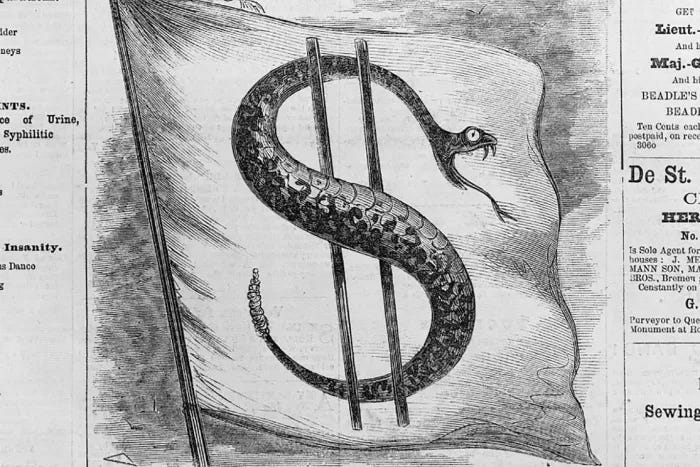
The sign of the dollar is an arbitrary configuration with a purpose — as is typical of a graphical symbol. Its meaning is defined by language derived from an important concept, but unlike most symbols, the dollar sign has layers of meaning and conflicting opinions about them.
In this brief essay, I will deliver some perspective on the origins of the symbol itself and apply the context to the most interesting and useful meaning and purpose of $. As such, I will not include every theory and opinion, but only those that fit my narrative of an orderly universe of emergent properties.
Emergence
Briefly, emergence is the natural development of complex systems having properties not attributable to any of their parts. The whole is far greater than the sum of the parts - and there is no evidence about those indicating such an effect.
For example, water molecules are not wet, but billions of them in combination will dissolve minerals and soak you. Also, ants have minuscule brains, but thousands of them build complex colonies by moving dirt. And most incredible of all, neurons are made of cells made of complex molecules. In turn, those are made of atoms and subatomic particles - none of which have consciousness, but billions of them in your skull after billions of years of evolution became your consciousness.
You are aware, identify objects, learn causality, form concepts, choose when to do all of that, or choose to tune out. That is free will. That is volition.
Not only does emergence show itself with matter, simpler life forms, and the human mind, but the ideal society would also emerge if its principles were in tune with natural law and willed by human nature. So far through human history, the symbol for that unknown ideal is $ — and to develop that thesis, let’s begin with the origins of the symbol itself.
Bohemian Etymology
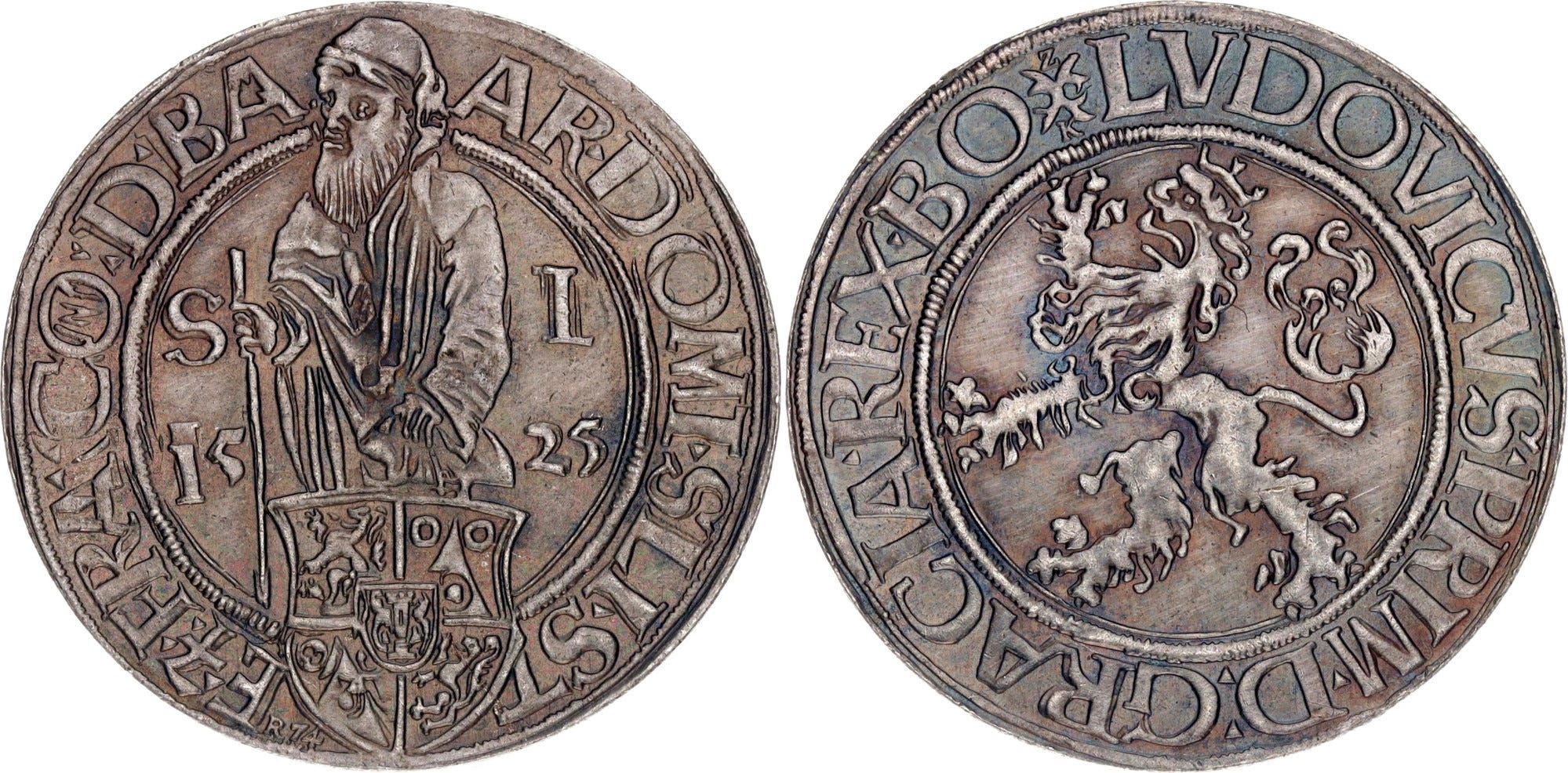
Known at various times as Silesia and Moravia, the Kingdom of Bohemia in central Europe was the home of the Joachim silver mines. As BBC Worklife reported, the monarchy began minting silver coins in 1520 that were known for their unusually fine consistency and gave them a name:
Logically if unimaginatively, the coin was dubbed the joachimsthaler, which was then shortened to thaler, the word that proceeded to spread around the world. It was the Dutch variation, the daler, that made its way across the Atlantic in the pockets and on the tongues of early immigrants.
Also spelled dahler or daalder, the Dutch coin was common in 17th century Holland and its colony of New Netherland in North America. Established in 1624 by the Dutch West India Company, the settlement not only comprised parts of New York, New Jersey, Delaware and Connecticut, but New Amsterdam was the name of the colony on lower Manhattan Island.
It is poetic justice that the future financial capital of the world would be the home of the original dollar — a hard currency used by the foremost influence for Americanism in the New World. After all, this was the Dutch Golden Age because of its traditions for international trade, religious tolerance, civic pride, liberal immigration, and republican governance.
Spanish Pillars
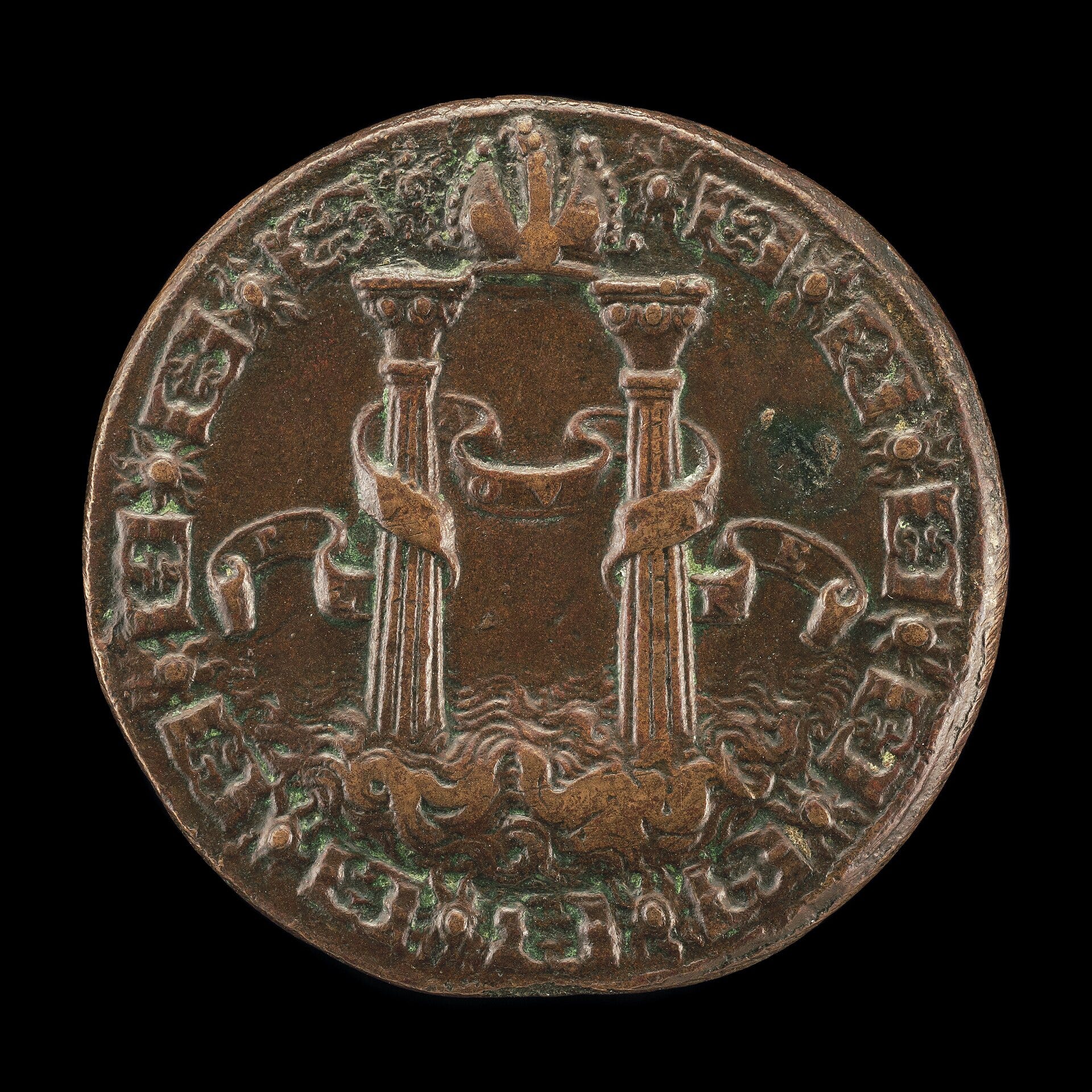
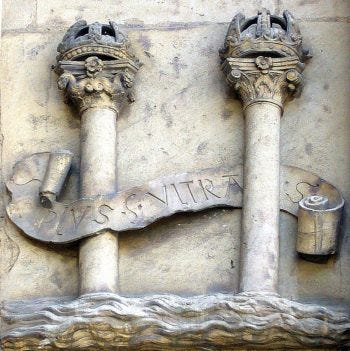
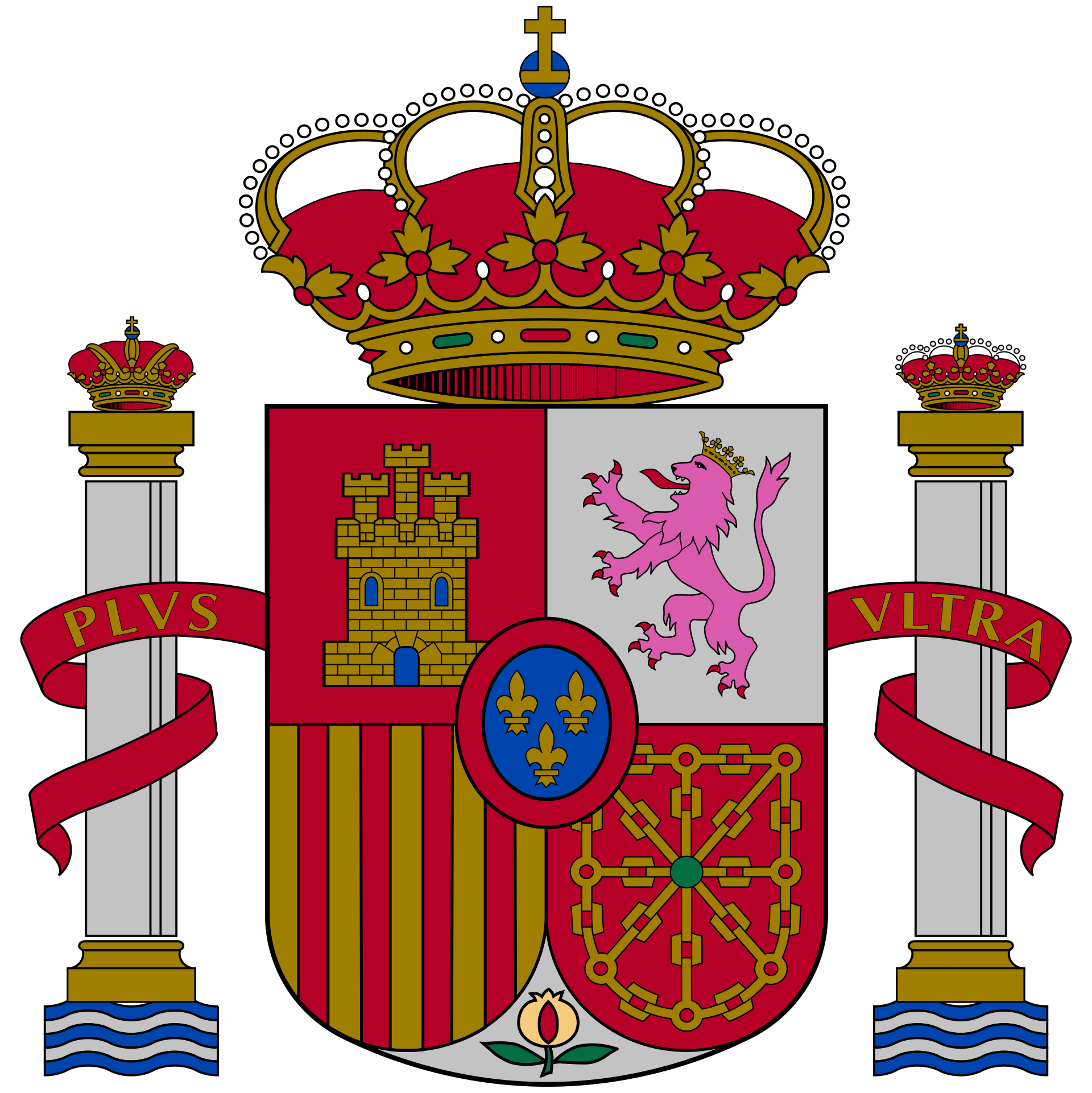
That the word dollar is of Germanic origin is easily provable, but the origin of the symbol $ is still shrouded in mystery - and there are many theories and even conspiracies. Accordingly, a relatively simple explanation is the most likely: the pillars of Hercules that mark the entrance to the Strait of Gibraltar helped inspire the vertical lines of $.
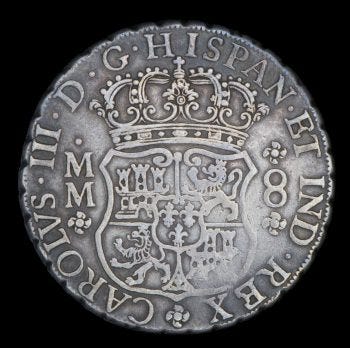
Minted in the Spanish empire through the 16th to 18th centuries and worth eight Reales, the Piece of Eight was a coin with over 25 grams of fine silver. And because of its uniform milling standards, this Spanish peso (piece of eight) became the world’s first international currency.
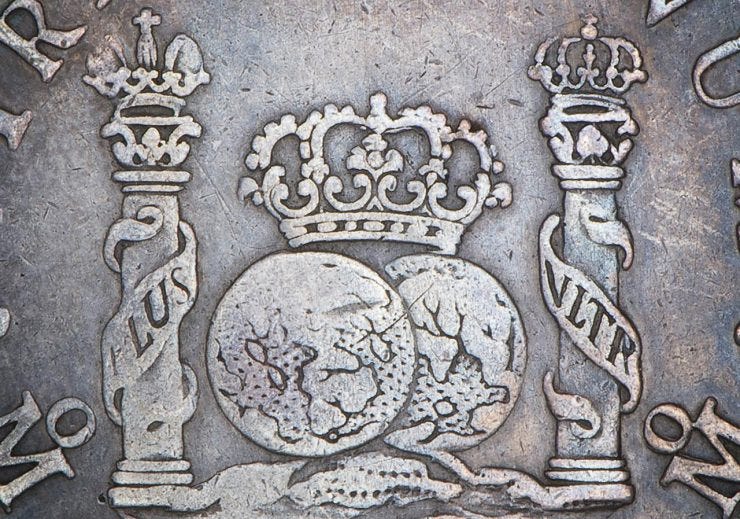
As you can see on the 1739 version of Mexican origin above, there are two pillars wrapped in banners that loosely resemble the letter S wrapping two vertical lines that became the sign of the dollar. Coincidentally, the significance of this was illustrated best by Isabel Paterson - in a passage that begins her signature book, The God of the Machine:

Toward the end of the fourth century of the pre-Christian era, a colonial Greek navigator sailed . . . through the Straits of Gibraltar, and thence up the coast of Spain and France and the British Isles to Ultima Thule, the designated end of the world . . . Pytheas ranks among the notable discoverers, an exemplar of the free mind. He could not know that he was looking toward America.
Two thousand years later, a Jewish immigrant from Poland (near Bohemia), Haym Salomon, negotiated loans from Spain, France and Holland to help finance the American revolution against Great Britain. And there was a natural sequence to the transactions. He sold the Bills of Exchange (borrowing credits) to American merchants and bankers for the Specie (hard coin money) needed by General Washington to pay the American and French soldiers.
Included were the Spanish dollars bearing pillars wrapped in banners because American “continentals” were worthless and the war would have been over and lost. And inscribed on them was the Latin phrase PLVS VLTRA, meaning “further beyond.”
American Independence
However, it was almost two years after the victory at Yorktown, Virginia, that hostilities formally ended with the Treaty of Paris in September, 1783. In the meantime, many urban centers in America, especially New York, were devastated, economic conditions were dire, price inflation was severe, and sound money was scarce. Naturally. War destroys wealth and productivity. Existing goods become dear. Prices soar.
Bear in mind, twenty years earlier, in 1763, the American colonies were possibly the most prosperous in the world and their per capita income was higher than in England.
The settlers’ raw exposure to the laws of nature and the benign neglect of the English ruling authorities had imbued in Americans the virtues of independence, productivity and justice. Brilliantly, John Adams claimed that was the true American Revolution.
What changed? The French and Indian War - a theater of the Seven Years war all over Europe, had ended in 1762 with a huge debt load for Britain and the end of America’s economic freedom.
But finally, with the ratification of the Constitution of the United States of America in 1790, the country had the structure of government, the independence of producers, and the mind of Alexander Hamilton to regain the prosperity of liberty backed by a sound dollar. To more fully appreciate the role of Hamilton, consider this summary from professor of political economy Richard Salsman:
Hamilton was a strong proponent of sound and stable money (a gold-silver standard), a vigorous private banking system, restraint on government spending (what he called “economy”), low and uniform tax and tariff rates, minimal regulation, a diminishing public debt, and solidity in public credit (defined as an adequate capacity to borrow). America has been at her best when these monetary-fiscal elements have been institutionalized, as they were in the 1790s and (to a lesser extent) in the 1920s.
As mentioned at the top, this is about an orderly universe with emergent properties. And for the principles of an ideal economic system, stable money, private banking, minimal regulation, and solid credit are the foundational precepts.
Conversely, the devaluation of money infects and devours this ideal. Specifically, government spending in excess of its original mandate will weaken money, politicize banking, expand regulations and destroy the credit of the State. And the latter is only derived from its taxing authority over the original creators of money and wealth.
Due Credit
Solid credit built on a borrower’s reputation and track record for value creation is critical. Credit must be earned before money is loaned. A reputation for creating value is the foundational principle for credit. States create nothing. A government’s credit is derived from its ability to tax the citizens who produce wealth. And when the power of government is derived from the consent of the governed who demand stable money and minimal regulation, the government’s credit is robust - and that is a big part of Hamilton’s legacy.
To bring that home, a man with credit who helped finance the American Revolution was Oliver Pollack. As reported by the travel company Atlas Obscura, he was an Irish immigrant who operated out of New Orleans and made his fortune as a trader:
After all, Pollock was Irish, and he believed that fighting Britain was his duty. As important as it was to root for the right horse, Pollock was still a businessman; he believed a sizable investment in the Revolution would pay dividends in the long run.
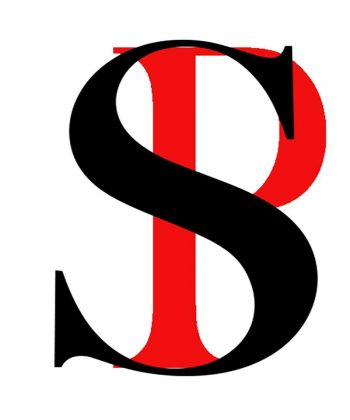
As a highly successful merchant with connections throughout the Caribbean, Pollack naturally traded in the stable currency of Spanish Dollars (aka pieces of eight) - and he had the habit of abbreviating Spanish Peso in his ledgers by combining the letters S and P. Consistent with emergence, this was unintentional to the sign of the dollar, as was the removal of the curve in the letter P - and the columns of Hercules wrapped in banners on the Spanish Peso that were used to pay soldiers that won independence.
Philadelphia Eagles
In 1795, a baker and a printer from Scotland found their way to America and established the Philadelphia Type Foundry Company. For a number of years, theirs was the only type foundry in the United States, and according to The Book of the Old Edinburgh Club published in 1953:
Andrew Binny and James Ronaldson, both natives of Edinburgh, established themselves in Philadelphia in 1796 and, according to the reviewer, the Columbiad Club of America . . . has rendered a valuable service to students of typographical traditions. For the firm of Binny and Ronaldson cut a number of book and jobbing romans and italics including, in 1797, the first dollar mark ever made in type for the American trade.
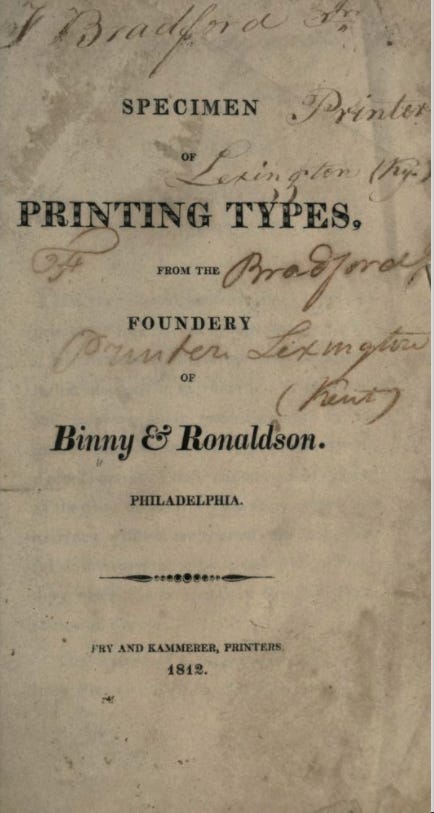
For his part, Binny was an American patriot who invented the Monticello typeface and Ronaldson was a serial entrepreneur who owned a cotton mill operation, a china dishware manufacturer, an affordable cemetery, a soup kitchen, and led an association for professional mechanics. Not surprisingly, they also became connected with Philadelphia’s first world-renowned printer — Benjamin Franklin, and bought the excellent French type that Franklin had bought in 1786 while serving as ambassador to France.
Hopefully, you can see that emergence for man-made systems depended on a plurality of people choosing values that obey natural law and ban the initiation of force in all human interactions. This emergent socioeconomic system is capitalism. It is organic. It is not planned or contrived. Its symbol is the sign of the dollar — and it evolved from a classical Greek mariner named Pythias who dared to venture past the gates of Gibraltar and record the discoveries of his journey.
Two thousand years later, Binny and Ronaldson concretized the sign of the dollar, sketched by Pollack, secured by Hamilton, brokered by Salomon, won by Washington, discovered by Adams, named by the Dutch, mined in Bohemia, and conceived in Greece. The essence of which are the productive virtues of independence and justice.